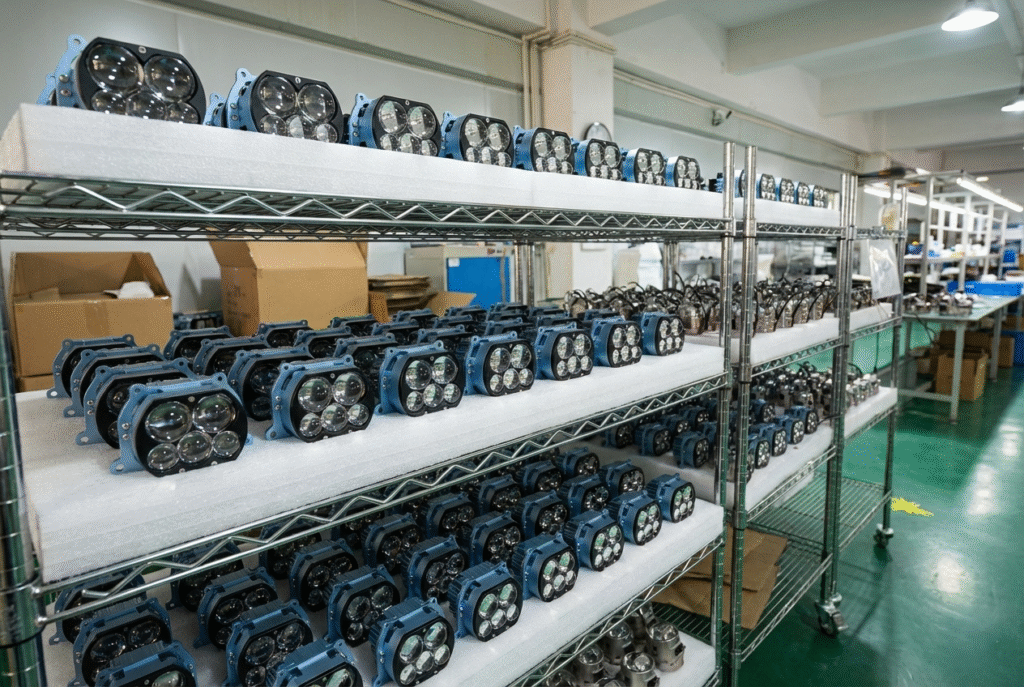
Are you tired of dealing with defective LED lenses that damage your shop’s reputation? Discover the precise manufacturing secrets behind durable, high-performance 5-Lens Matrix Bi-LED projectors.
The manufacturing process involves selecting High Borosilicate Glass[^1] and aviation-grade aluminum, followed by precise SMT mounting and die-casting. Rigorous testing, including 4-8 hour high-temperature aging and salt spray tests, ensures every unit meets global standards for durability and brightness before shipping.
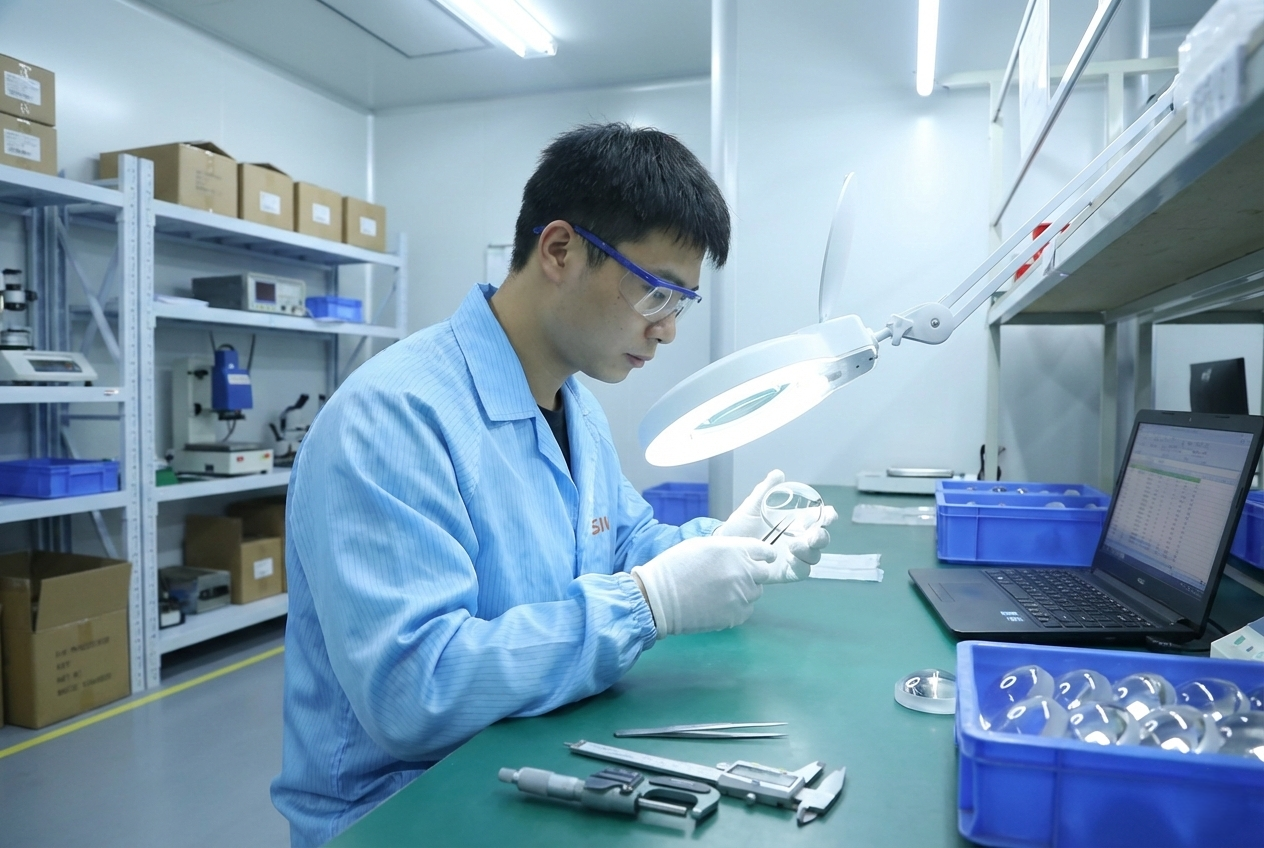
At SIUNI, we have spent 16 years perfecting this process. Many importers worry about inconsistent quality when buying from overseas. I want to show you exactly how we build our lenses step-by-step. This guide will give you confidence in the products you sell to your customers.
[claim claim=”5-Lens Matrix lenses use plastic optics for better heat resistance.” istrue=”false” explanation=”High-quality lenses use high borosilicate glass for superior clarity and heat resistance.”]
[claim claim=”Aging tests help identify early electronic failures.” istrue=”true” explanation=”Running the lights for 4-8 hours filters out defective units before they leave the factory.”]
What raw materials are used in high-quality 5-Lens Matrix Bi-LED lenses?
Cheap materials cause lens yellowing and failure quickly, leading to angry customers. You need components that withstand heat and time to build a lasting brand.
We use high borosilicate glass for the lens to ensure optical clarity and heat resistance. The housing utilizes Aviation-Grade Aluminum[^2] for superior heat dissipation, preventing the LED chips from overheating during long drives.
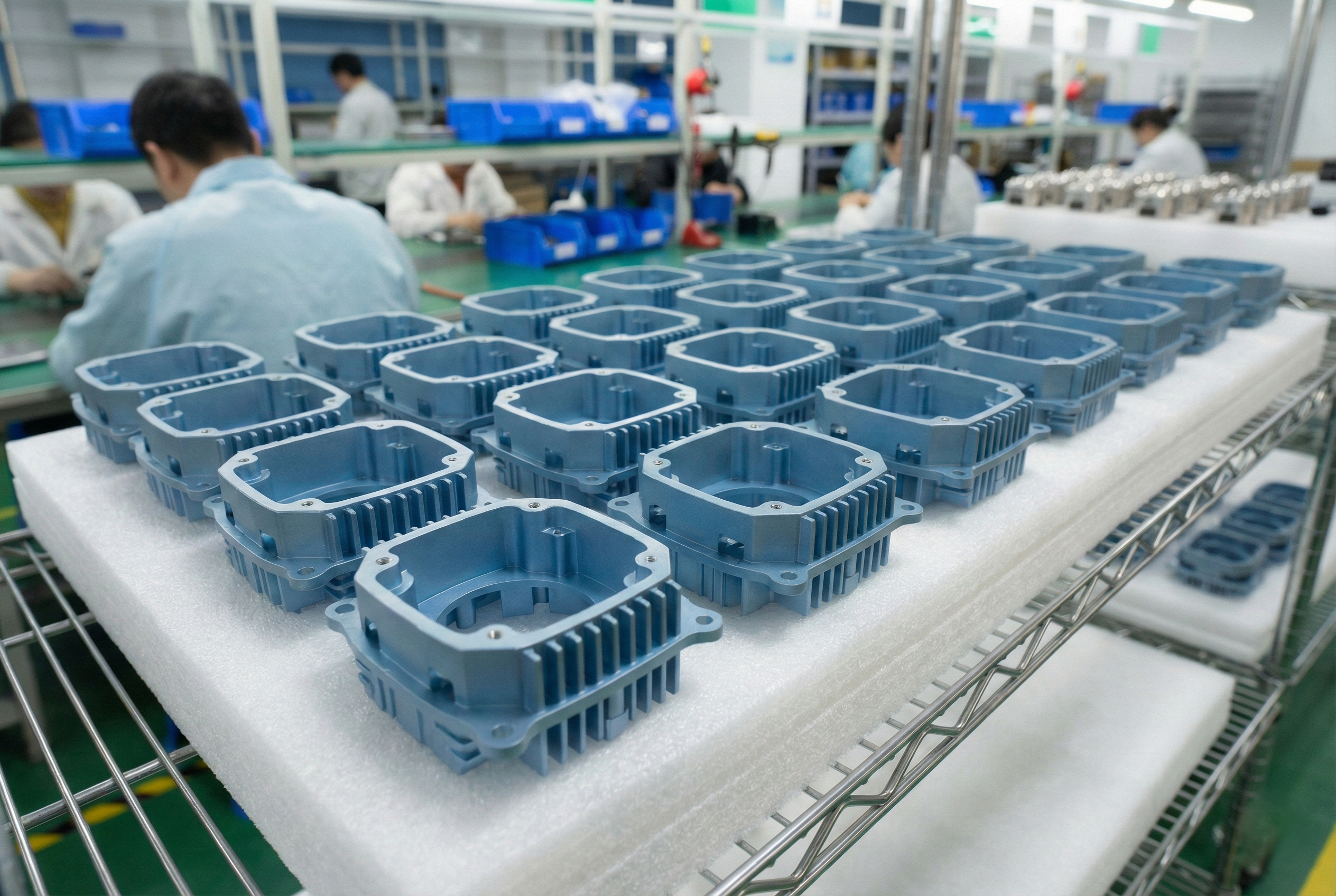
To understand why our 5-Lens Matrix Bi-LED lenses last so long, we must look at the foundation. The choice of material dictates the lifespan of the product. In my experience at SIUNI, cutting corners here is the biggest mistake a factory can make. We focus on two main components: the optical lens and the heat sink.
The Optical Lens
We do not use standard plastic. We use High Borosilicate Glass. This material is critical because it has a very low coefficient of thermal expansion. This means it does not change shape when it gets hot. Plastic lenses often turn yellow after a few months of use, which reduces brightness. Glass stays clear for years.
The Heat Sink
For the body of the projector, we use Aviation-Grade Aluminum. We create this shape using a high-pressure die-casting process. This is not just about being strong. This specific aluminum alloy moves heat away from the LED chip very fast. If the heat stays near the chip, the light gets dimmer.
| Material | Common Alternative | Why We Choose Our Material |
|---|---|---|
| High Borosilicate Glass | PMMA (Plastic) | Resists high heat, does not yellow, better light transmission. |
| Aviation Aluminum | Recycled Iron/Alloy | Lighter weight, faster thermal conductivity, resists corrosion. |
| Copper Substrate | Aluminum PCB | Copper transfers heat from the chip 2x faster than aluminum. |
[claim claim=”Plastic lenses are more durable than borosilicate glass.” istrue=”false” explanation=”Plastic lenses are prone to yellowing and deformation under high heat.”]
[claim claim=”Aviation-grade aluminum is used for heat dissipation.” istrue=”true” explanation=”This material effectively draws heat away from sensitive LED components.”]
How are the LED chips and cooling fans selected for durability?
leading paragraph:
A burnt-out chip means a warranty claim that eats into your profits. Selecting the right core components is critical for the longevity of the headlight.
We select top-tier LED chips based on high lumen output and thermal stability. Cooling fans are chosen for their high RPM and low noise, ensuring active cooling that matches the heat generation of the matrix system.
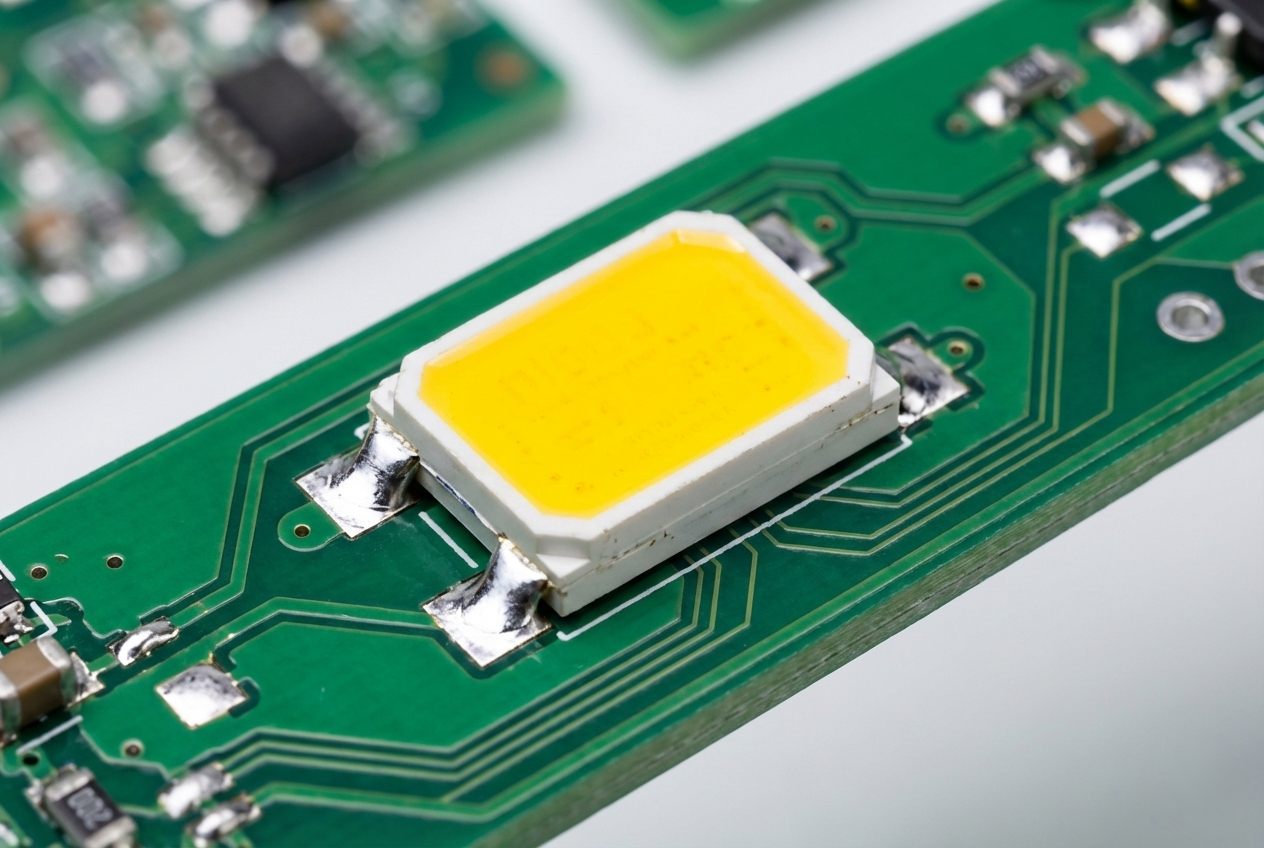
The "heart" of the 5-Lens Matrix system is the LED chip, and the "lungs" are the cooling fan. If either fails, the product dies. At SIUNI, we treat the selection process with extreme care. We do not just pick the brightest chip; we pick the most stable one.
The LED Chip Selection
We use Surface Mount Technology (SMT) to place the chips onto the board. This machine placement is precise. We look for chips that maintain color consistency. Some cheap chips turn blue or purple when they get hot. We test our chips to ensure they stay pure white (usually 6000K) even under stress.
The Cooling Fan
The matrix design creates a lot of light, which creates heat. Passive cooling (just the metal body) is not enough. We select high-speed, hydraulic fans.
- RPM (Revolutions Per Minute): The fan must spin fast enough to move air but not so fast that it vibrates the headlight.
- Bearing Type: We avoid cheap sleeve bearings that dry out. We prefer bearings that can run for 30,000 to 50,000 hours.
- Noise Level: A loud fan bothers the driver. We test to ensure the fan is silent inside the cabin.
Critical Thinking: Heat vs. Light
There is a trade-off. Higher brightness equals more heat. We balance the chip power with the fan capacity. If we push the chip to 100% power but the fan can only cool 80%, the light will fail. We tune our chips to run at an optimal level where they are bright but safe.
[claim claim=”High RPM fans are always the best choice.” istrue=”false” explanation=”Fans must balance speed with noise levels and vibration control.”]
[claim claim=”SMT technology ensures precise chip placement.” istrue=”true” explanation=”Automated mounting ensures better electrical connection and thermal transfer.”]
What is the assembly process in a dust-free workshop?
Dust inside a lens looks terrible and blocks light output significantly. A clean environment is non-negotiable for professional assembly to ensure customer satisfaction.
Our assembly takes place in a certified Dust-free workshop[^3]. Workers wear anti-static clothing to prevent damage to sensitive electronics, ensuring that every 5-Lens Matrix unit remains pristine and free of internal debris.
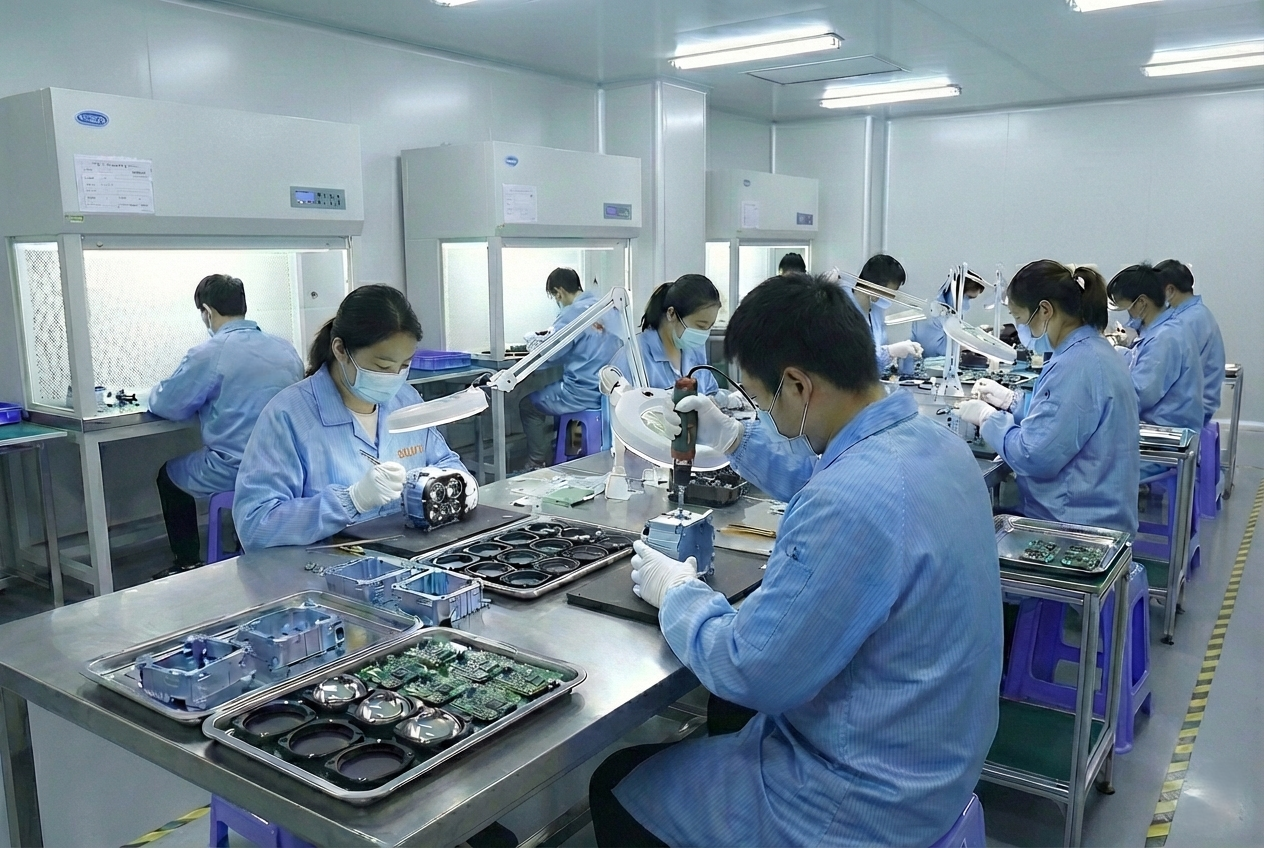
You might wonder why a car part needs to be made in a room as clean as a hospital operating room. The answer is simple: optics magnify everything. A tiny speck of dust on the LED chip will look like a large black spot on the road when projected through the 5-Lens Matrix.
The Environment
Our workshop at SIUNI is a controlled environment. We control the temperature and humidity.
- Air Filtration: Giant filters clean the air constantly to remove dust particles.
- Personnel Gear: Every worker wears a full-body anti-static suit, a hat, and shoe covers. Before entering, they pass through an "air shower" that blows loose dust off their clothes.
Electrostatic Discharge (ESD) Protection
LEDs are sensitive electronics. Static electricity from a worker’s hand can destroy a chip without anyone noticing until later.
- ESD Floors: The floor conducts electricity away.
- Wrist Straps: Workers wear grounded wrist straps.
- Ionizing Fans: These fans blow air that neutralizes static charges on the plastic parts.
By combining dust control with static control, we ensure that the lens you receive is clear and the electronics inside are not damaged by invisible shocks. This attention to detail is what separates a premium manufacturer from a budget workshop.
[claim claim=”Dust inside the lens improves light diffusion.” istrue=”false” explanation=”Dust blocks light and creates dark spots in the beam pattern.”]
[claim claim=”Anti-static clothing protects LED chips.” istrue=”true” explanation=”It prevents static electricity from damaging sensitive electronic components.”]
How do manufacturers perform the light beam pattern alignment test?
Misaligned beams blind oncoming drivers and fail vehicle inspections immediately. Precision alignment is vital for safety and legal compliance in your market.
Technicians use a specialized optical aiming screen to align the cutoff line. We adjust the 5-Lens Matrix to ensure a sharp, flat cutoff for low beams and a focused hotspot for high beams, meeting international road safety standards.
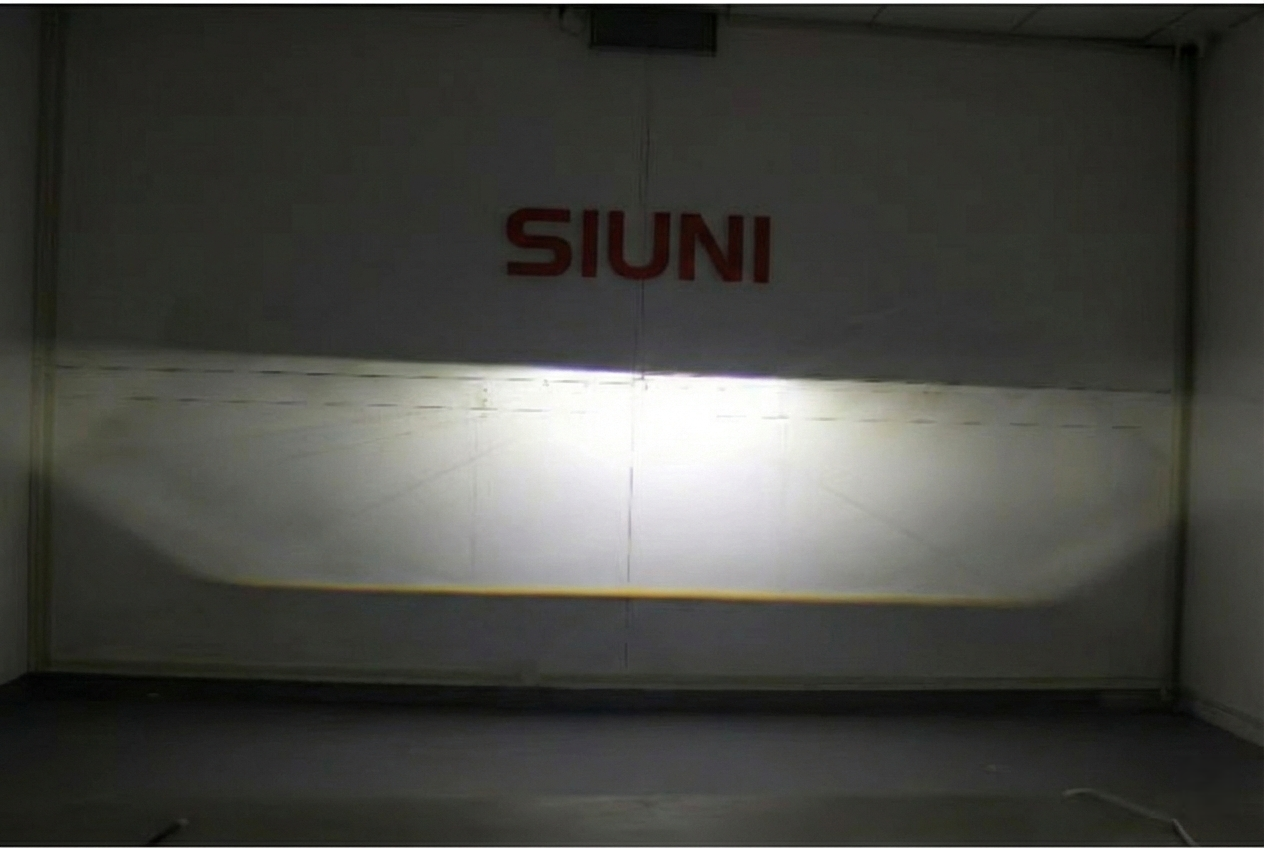
The "Matrix" in our 5-Lens Matrix Bi-LED lens means there are multiple light sources. Getting them all to point in the exact same direction is a difficult task. If one lens is off, the beam pattern will look messy.
The Alignment Process
We place every single unit on a test stand. This stand faces a calibrated optical screen at a specific distance.
- Low Beam Cutoff: The most important part is the "cutoff line." This is the line that keeps light out of the eyes of oncoming drivers. It must be sharp and straight. In Left-Hand Drive (LHD) markets, it steps up to the right. We adjust the internal shield until this line is perfect.
- Matrix Focus: The 5 lenses must work together. The central lenses provide the distance (high beam), while the side lenses provide the width. We adjust the screws on the lens holder to merge these beams.
Why This Matters
If we skip this step, your customer installs the light and sees a blurry road. Or worse, they get pulled over by the police. We check for:
- Sharpness: Is the blue line at the cutoff distinct?
- Hotspot: Is the brightest part of the light exactly in the center?
- Width: Does the light cover the sides of the road?
We do not ship a lens until the beam pattern matches our master template perfectly.
[claim claim=”Alignment is only necessary for high beams.” istrue=”false” explanation=”Low beam alignment is critical to prevent blinding other drivers.”]
[claim claim=”A sharp cutoff line is a sign of quality.” istrue=”true” explanation=”It indicates precise optical engineering and correct assembly.”]
What quality control tests (Aging/Waterproof) are done before shipping?
Shipping defective products overseas is a logistical nightmare for importers. Rigorous testing prevents costly returns and keeps your profit margins safe.
We perform a High-temperature aging test[^4] for 4 to 8 hours to stress-test the components. Additionally, salt spray testing checks for corrosion resistance, and waterproof tests ensure the unit can withstand harsh weather conditions.
Testing is the final gatekeeper. At SIUNI, we believe in stressing the product before it reaches the customer. If a light is going to fail, I want it to fail in my factory, not in your warehouse.
The Aging Test (Burn-In)
We turn the lights on and leave them on. We run them for 4 to 8 hours continuously.
- Why? Electronics often fail in the first few hours of use (this is called "infant mortality"). By running them past this period, we eliminate the weak units.
- Temperature: We monitor the temperature. If a fan fails or the thermal paste is bad, the light will overheat and shut down during this test.
Environmental Tests
Cars face rain, snow, and salt.
- Salt Spray Test: We put the lenses in a chamber that sprays salty mist. This simulates driving near the ocean or on salted winter roads. We check for rust on the aluminum and screws.
- Waterproof Test: For fog lights or external lenses, we submerge them or spray them with high-pressure water.
- Vibration Test: We shake the lenses violently to simulate driving on a bumpy road. This ensures no screws come loose and the soldering holds tight.
| Test Name | Duration | Purpose |
|---|---|---|
| Aging Test | 4-8 Hours | Detect early electronic failure and overheating. |
| Salt Spray | 24-48 Hours | Check corrosion resistance of metal parts. |
| Vibration | Variable | Ensure structural integrity on rough roads. |
[claim claim=”Aging tests are completed in 10 minutes.” istrue=”false” explanation=”Effective aging requires 4-8 hours to identify potential failures.”]
[claim claim=”Salt spray tests simulate coastal driving conditions.” istrue=”true” explanation=”This ensures the materials will not corrode in salty environments.”]
How to package automotive lenses to prevent damage during export?
Broken lenses upon arrival mean lost profit and insurance headaches. Proper packaging is the final, crucial step of our quality control process.
We use custom-molded foam inserts that fit the specific shape of the 5-Lens Matrix. The boxes are reinforced cardboard, often palletized and wrapped, to withstand drops and stacking pressure during long ocean or air freight.
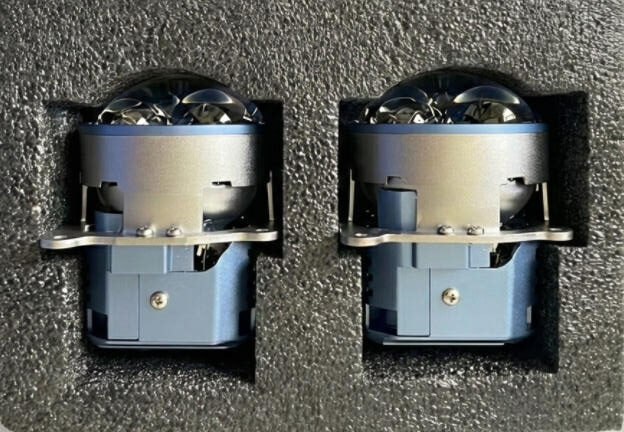
I have seen many good products ruined because of bad packaging. International shipping is rough. Boxes get thrown, dropped, and stacked high in containers. To protect the 5-Lens Matrix Bi-LED lenses, we use a multi-layer approach.
The Inner Protection
We do not use bubble wrap or newspaper. We use EPE Foam (Expanded Polyethylene).
- Custom Mold: We create a mold that matches the exact shape of the lens. The lens sits inside this foam like a puzzle piece. It cannot move.
- Shock Absorption: If the box is dropped, the foam absorbs the energy, not the glass lens.
The Outer Protection
- Hard Cardboard: We use 5-layer corrugated boxes. They are crush-resistant.
- Moisture Protection: We place a silica gel packet inside to absorb humidity during ocean transport.
- Palletizing: For wholesale orders, we stack the boxes on pallets and wrap them tightly with plastic film. This keeps the boxes together and prevents them from falling over.
We also label every box clearly with the model number and "Fragile" warnings. This ensures that when the goods arrive at your warehouse, they look as good as they did when they left our production line.
[claim claim=”Newspaper is sufficient for packaging glass lenses.” istrue=”false” explanation=”Newspaper offers no structural support or shock absorption.”]
[claim claim=”Custom foam prevents movement during shipping.” istrue=”true” explanation=”Immobilizing the product prevents impact damage inside the box.”]
Conclusion
From raw materials to packaging, SIUNI controls every step. Our 16 years of experience ensure you receive reliable 5-Lens Matrix Bi-LED lenses that build your business reputation.
References
[^1]: Explore how High Borosilicate Glass enhances optical clarity and heat resistance in LED lenses.
[^2]: Learn about the advantages of Aviation-Grade Aluminum for heat dissipation in LED projectors.
[^3]: Understand why a clean environment is crucial for the quality of optical products.
[^4]: Find out how high-temperature aging tests help identify early failures in LED products.